

Redemption and Salvation:
Understanding the Difference
In Christian conversation, the words redemption and salvation are often used as though they mean exactly the same thing. Many believers interchange them without much thought. Yet, when we look carefully at the language of Scripture, we begin to see that while these two realities are deeply connected, they are not identical. Each carries its own meaning, and together they reveal the fullness of what God has done and continues to do for humanity.
What Is Redemption?
The word redeem carries the idea of buying something back. It is a transactional word. In the ancient world, redemption referred to purchasing back property, freeing someone from slavery, or paying a price to release someone from captivity.
Scripture uses this language to describe what Christ accomplished through His sacrifice. Humanity had fallen under the power of sin. We were no longer living in the freedom God intended. Yet, through the death of Christ, a price was paid. That price was not silver or gold, but His own life.
Redemption, therefore, speaks of something objective and outward. It is a completed work. The price has been paid. The door has been opened. Because of Christ’s redemption, humanity is no longer without hope. Yet, redemption, while powerful and essential, is not the entire story.
What Is Salvation?
Salvation goes deeper. If redemption deals with the price that was paid, salvation deals with the life that must now grow within us. Salvation is not merely rescue from punishment; it is rescue from the condition that caused the problem in the first place.
The Bible reveals that although we have been redeemed from sin, the tendencies of our fallen nature still remain. The outward debt may be paid, but the inward transformation must still take place. Salvation, therefore, is inward and living. It is not simply a legal declaration; it is a process in which God works within us. Salvation preserves us, rescues us from danger, and gradually lifts us into a higher life, the life of God Himself. It is the work of God within the heart, shaping us, restoring us, and bringing us into alignment with His nature.
How Redemption and Salvation Work Together
Although redemption and salvation are different, they cannot be separated. Redemption opens the door. Salvation walks us through it. Without redemption, salvation would not be possible, because the barrier of sin would still stand between humanity and God. Yet, without salvation, redemption would remain something external, something accomplished for us but not yet realized within us. Redemption addresses the problem of guilt. Salvation addresses the problem of life. One removes the barrier; the other restores the person. Together, they reveal the fullness of God’s intention: not merely to forgive humanity, but to bring humanity up to the level of His own life and likeness.
My Reflection
As I reflected on this distinction, something quietly shifted in my understanding. For a long time, it was easy to think of salvation simply as forgiveness, as though the entire Christian life begins and ends with the moment we are redeemed. But Scripture reveals something far richer and far deeper. Redemption is the beginning, not the end.
The Lord did not redeem us simply so that we could escape judgment. He redeemed us so that His life might grow within us. Salvation is this ongoing work, the gentle yet powerful activity of God transforming the human heart. And, this realization changes how we see the Christian journey. The question is no longer only, “Have I been redeemed?” It becomes, “Is the life of God growing within me? Is Christ being formed in me?”
Salvation is not static. It is living. It is the continual rescue of our hearts from the nature and power of sin, the slow restoration and uplifting into what humanity was always intended to be. When we see redemption and salvation in this way, we begin to appreciate the depth of what God has done for us and what He still desires to do within us.
This reflection is only a small doorway into a much deeper exploration found in Redemption and Salvation, where these themes unfold further and invite us to consider the profound work of God in both redeeming and transforming His people.
Impressions upon reading the booklet,
Redemption and Salvation
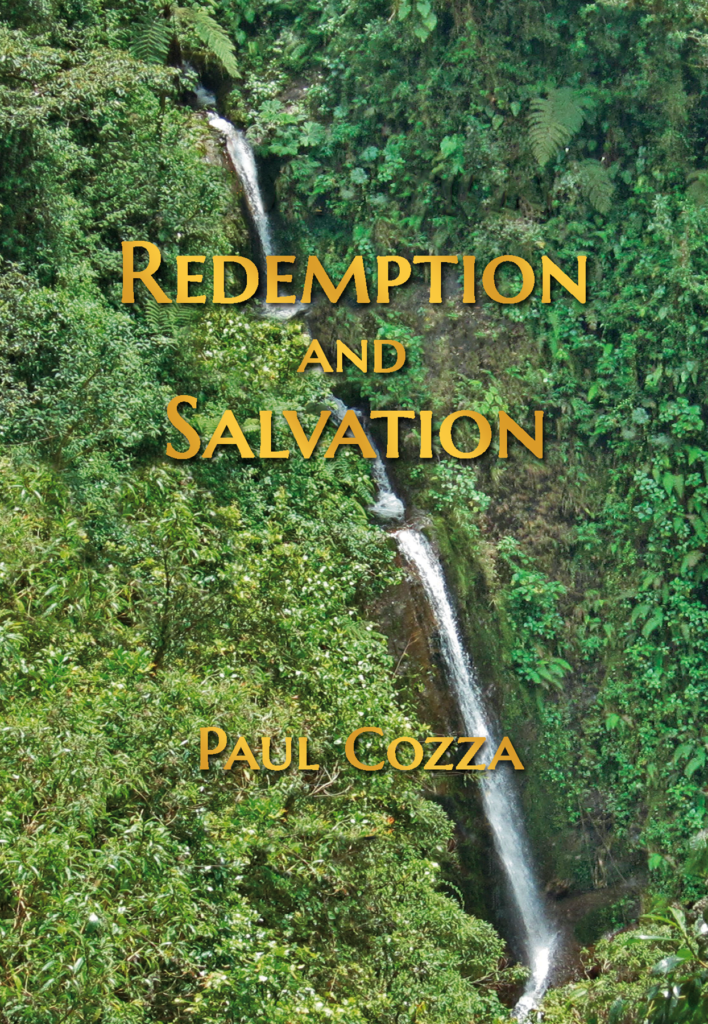
More information about the booklet, Redemption and Salvation, as well as a free copy, can be found here.
